
Who you are actually hiring
Mold Shield Restoration is a licensed Louisiana mold remediation contractor. Mold is the only thing we do. Here is the license, the insurance, and the experience behind it — stated plainly, so you can weigh it against anybody else you are calling.
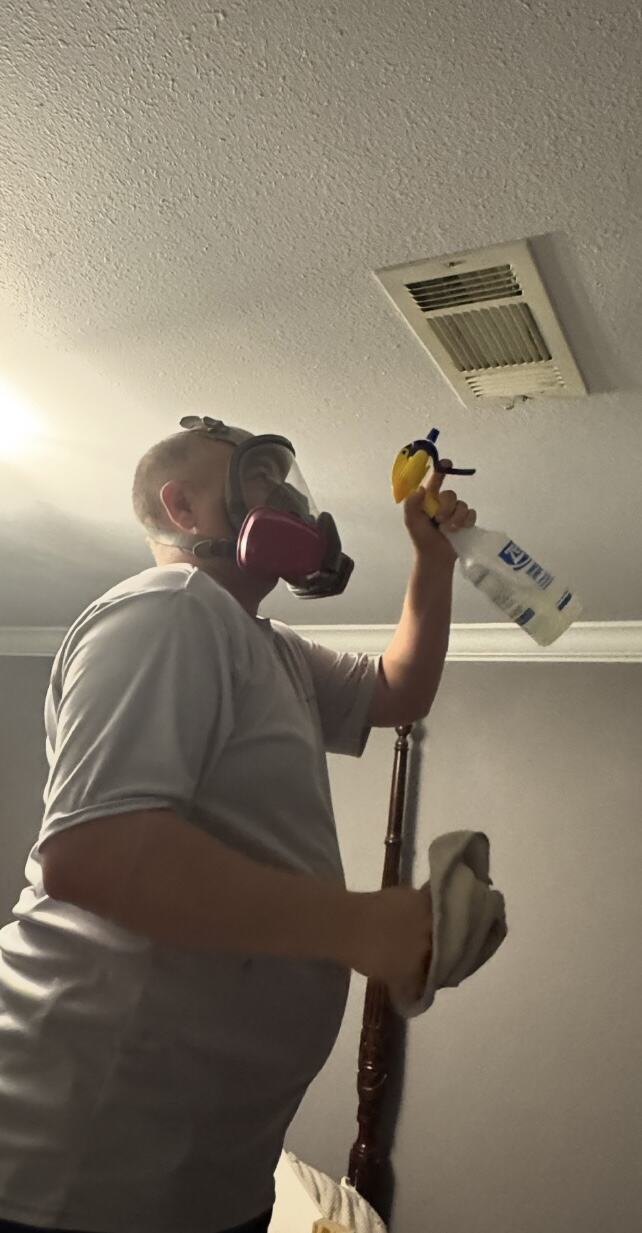
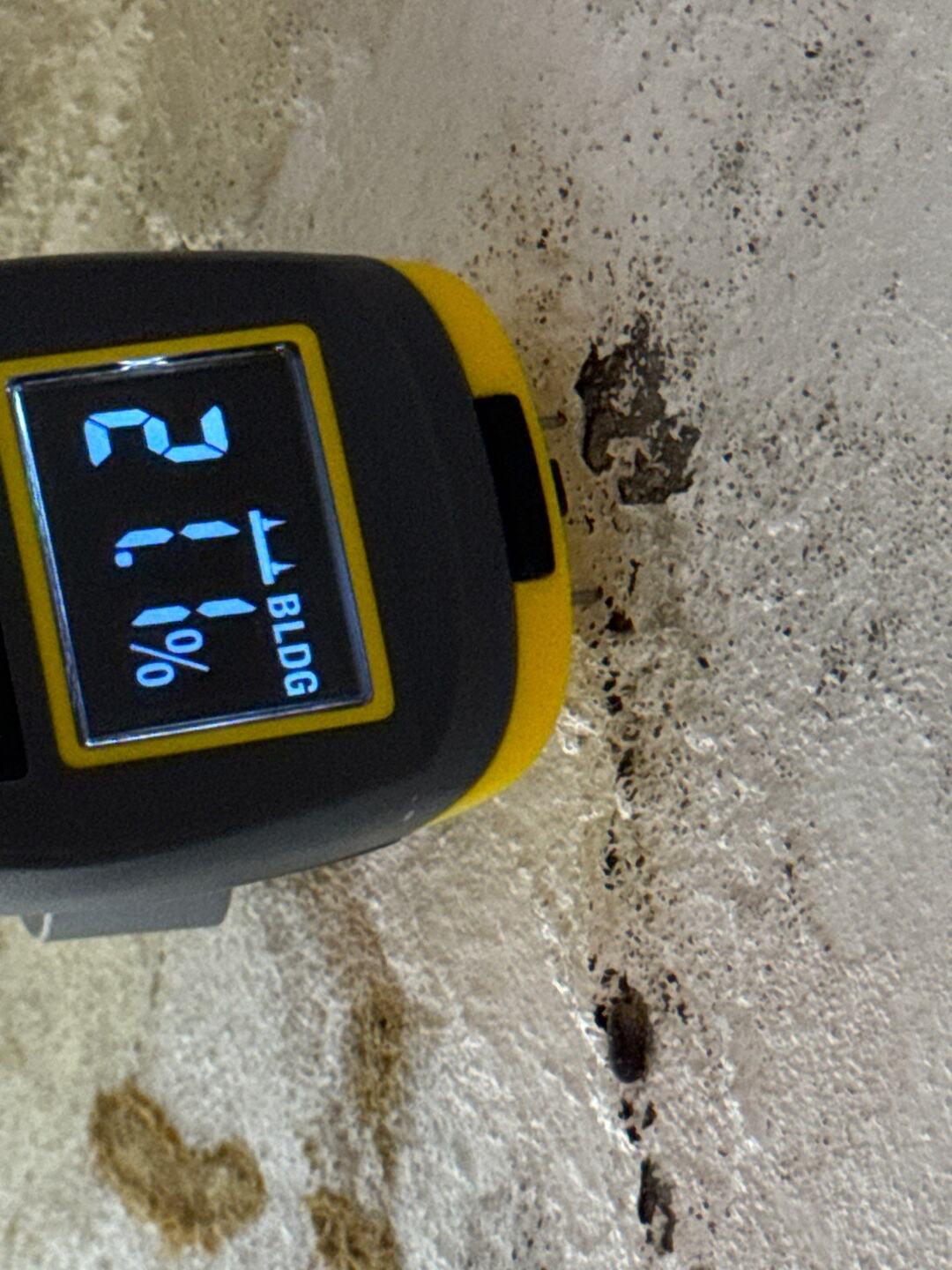
The license
Louisiana Mold Remediation Contractor — License MR.07924.
This is the one claim on this page you can check yourself, and you should. The Louisiana State Licensing Board for Contractors maintains a public search. It takes about a minute.
Worth knowing what the license does and does not mean. Louisiana requires a mold remediation license once the mold portion of a job reaches $7,500 — below that, nobody is legally required to hold anything at all. And the license requires one person in a company to be mold certified, not everybody on the crew. The full explanation of what Louisiana law actually requires is here.
We are telling you the limits of our own credential because you are going to hear "licensed and insured" from everyone you call, and it is worth knowing how little that phrase guarantees on its own.
The certifications
MICRO Certified Mold Remediation Contractor (CMRC) — #87045. Containment, removal, cleaning and clearance for mold remediation work.
MICRO Certified Mold Inspector (CMI) — #87042. Finding mold and the moisture behind it: where it hides, what feeds it, and how far it has spread.
The insurance — and why it is a real differentiator
Mold Shield Restoration is fully insured for mold remediation. That is not a boast — carrying the right coverage is standard practice, and any company that intends to stay in business has to. It is worth explaining only because of what the phrase “fully insured” hides when somebody else says it.
Louisiana raised the minimum general liability for mold remediation contractors from $100,000 to $500,000 under Act 757, effective August 1, 2026. It is being enforced now.
But the limit is only half the question. Mold is commonly excluded from general liability altogether. The standard industry endorsement — the fungi or bacteria exclusion, form CG 21 67 — removes both liability for mold damage and the cost of testing for, cleaning up, removing or containing it. A contractor can hold a valid policy, tell you truthfully that they are fully insured, and have no coverage for the work in your house. The policy has to be rated for mold, which is a different underwriting class.
We will send you our certificate on request — ask anybody else you call for theirs. Read the lines rather than the totals, and look for mold or fungi coverage rather than general liability alone.
The experience, and an honest word about the company’s age
Mold Shield is in its second year. We would rather say that at the top than have you work it out.
The company is young. The experience is not. Before starting Mold Shield, founder Ron Prevost spent years as a superintendent for a residential homebuilder, and as a project manager and VP of operations at general contractors and restoration companies.
That distinction is the whole reason this company exists, and it shows up on every job. A mold certification covers what to do once mold has been found: contain the area, cut the material out, clean it, run a scrubber. We hold two, and they matter. What they don’t cover is how a house was put together: where the plumbing runs, how framing carries water, what an attic does to the rooms underneath it.
Water does not surface where it enters. It can come in at one point and appear thirty feet away, on a different wall, in a different room. If you do not know how the house was built, you find the stain instead of the source — the mold gets removed, you pay for it, and it comes back, because nothing that caused it changed.
Having both, the construction years and the mold certifications, is what makes tracing the water the first step instead of an afterthought.
How we are set up, and why it costs you less
Mold only
We do not run water losses, fire, smoke or biohazard work. A general restoration company sees mold as one line on a menu. Here it is the menu, which means we see the same patterns often enough to recognize them.
A partner network, not a phone list
Master HVAC technicians, an attic ventilation specialist, general contractors and roofers, coordinated through one point of contact. Mold is all we do, but the whole job still closes out as one job.
No overhead-and-profit markup
The standard arrangement is to take a subcontractor’s bid, add ten to forty percent, and present it as your own price. We do not add that. You pay our partners’ own prices, and several discount further for our customers.
Published pricing
Our minimum is $600 and the price ranges are on the website. Most companies will not put a number in writing until somebody is standing in your hallway, and there is a reason for that. See the pricing →
The whole project, not just our part
Mold is rarely the only thing a house needs by the time we are involved. We have a network of partners we have worked alongside for years — HVAC, attic and ventilation work, independent assessors for testing, rebuild and repair — and we coordinate with them rather than finishing our piece and handing you a list of numbers to call. More on how that works →
Locally owned
Not a franchise. There is no national call center, no territory manager, and no royalty being paid out of your invoice.
It is worth knowing that “locally owned” has become a soft phrase in this industry. Across home services generally, outside investors have been buying up established local companies, scaling them and selling them on — and the name on the truck usually does not change when that happens. A company can be locally operated, locally staffed, and still be answering to owners who are neither.
We are not that. Ownership is here, and the person who owns it is the person who comes to your house.
Free inspection, and a real answer
No charge to have us look, and if you do not have a problem we say so and leave. Charging to show up is why people wait until a $600 problem is a $4,000 one.
What we do not do
A company’s limits tell you more than its service list.
We do not test
Louisiana licenses mold assessment and mold remediation separately and prohibits one company from holding both roles on the same property — because a company paid to find mold and then paid again to remove it has an interest in finding plenty. We remediate, and refer testing to an independent assessor.
We do not do encapsulation
Sealing a crawl space is a different trade. We treat the mold; our partners handle encapsulation where it is genuinely needed — and it is needed less often than it is sold. Crawl spaces →
We do not start work without the owner's authorization
Remediation means opening walls and removing material, so the work has to be authorized by the property owner. We work with owners and the managers acting for them.
Where we work
The I-10 and I-12 corridor — Lafayette east through Baton Rouge and the capital region, down to New Orleans and Metairie, across the Northshore through Covington and Slidell, and over the state line to Gulfport and Biloxi.
Ask us anything on this page
Including the certificate of insurance and the license lookup. The evaluation is free and there is no obligation — if you do not need us, we will tell you that.
225-500-1530Call or text and tell us what you are seeing.
Text us what you are seeing